History of Holy Cross
Holy Cross, Ramsbury is an extraordinarily beautiful church. It is steeped in history dating back to Saxon times, when the first Bishop of Ramsbury was created in 909 AD, with several Ramsbury bishops going on to lead the English church later in their careers. Most of the current church was built in the Medieval period and, except for a period in the nineteenth century, has been well-maintained and the Medieval core survives largely intact to the present day. The church is full of local history, with nearly two thousand memorials to local individuals and families - an extraordinary number for a village church.
Origins
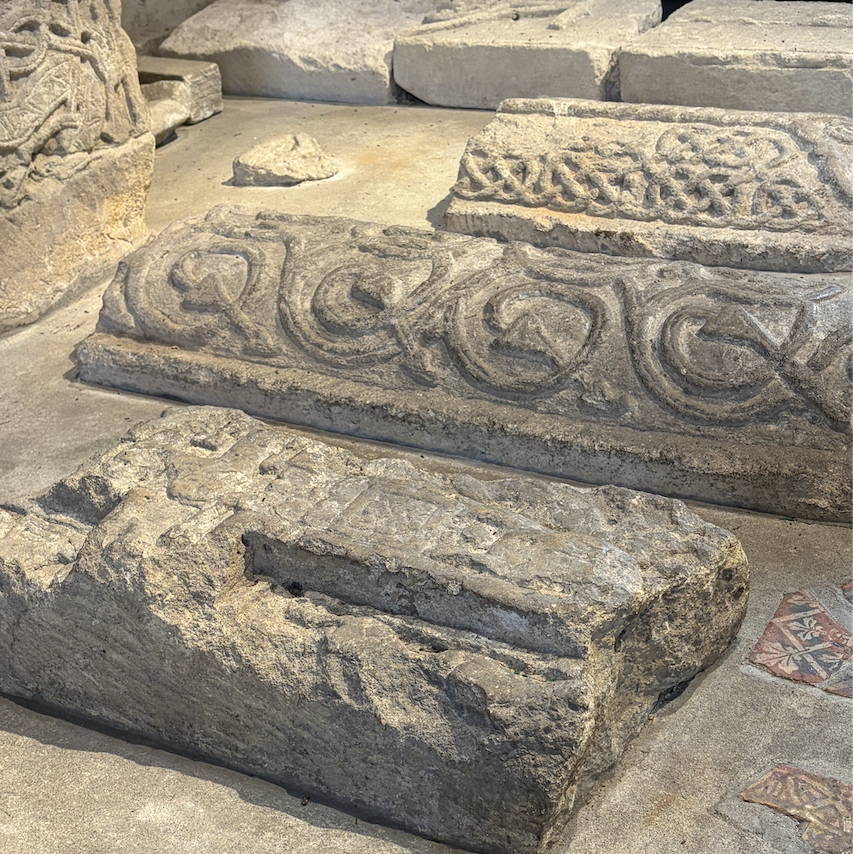
Ramsbury Church, officially the Church of the Holy Cross in Ramsbury, stands on a site of major early Christian importance. There is evidence of a large and elaborate church existing here before 900 AD, including Anglo-Saxon stone sculptures discovered during later restorations. In 909, the Bishopric of Ramsbury was created for Wiltshire and Berkshire and the church, probably built of timber and flint, served as a small cathedral minster until the see was united with Sherborne in 1058 and later moved to Old Sarum (and eventually Salisbury). Several of its bishops went on to be Archbishops of Canterbury.
One of the most important survivals is a group of 9th-century Saxon stone fragments, including parts of cross-shafts and decorated tomb slabs, now displayed at the west end of the north aisle.
The Medieval church
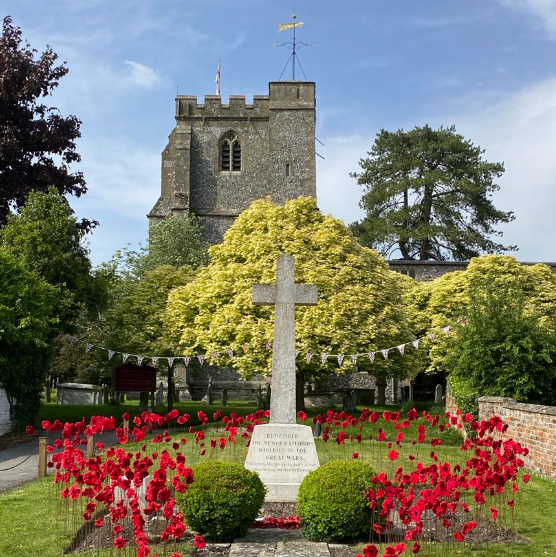
The early church was completely replaced by a flint-built Medieval building in the 1200s. It took a century to complete and was the largest construction project the village had ever seen. The church we see today retains a remarkable amount of surviving Medieval fabric and detail. The nave is largely early 14th-century, while the chancel was lengthened in the 15th century. The massive west tower dates from around 1400 and has a three-light west doorway with surviving consecration crosses on its jambs. The church also contains:
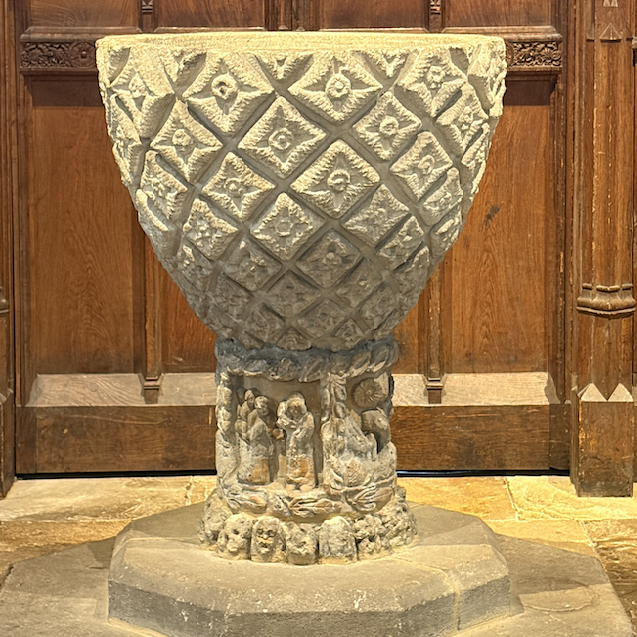
- a 12th-century font;
- a 15th-century Purbeck marble tomb chest; and
- in the Darrell Chapel, three 15th-century chest tombs.
Later history
The church continued to evolve after the Middle Ages. Its monuments record prominent local families and individuals from the 17th to the 20th centuries, including Sir William Jones (1631-1682), a prominent Restoration lawyer and politician, who rose to be Attorney-General to Charles II and who built Ramsbury Manor as his country seat.
By the late 19th century the church was in poor condition. The aisles were rebuilt in 1891 and the south porch followed in 1892. Much of the church's Victorian furniture dates from 1892-93.
Holy Cross is now a Grade I listed building, reflecting both its architectural importance and the exceptional survival of historic fabric, fittings and monuments within a building that has served Ramsbury for centuries. What is more, in 1974 the Bishop of Ramsbury was reinstated and continues as a suffragan bishop in the Diocese of Salisbury - a cherished reconnection back to Saxon times.